News — Summer 2026
Featured in Art & Ideas, Philadelphia
My work and practice are the subject of the featured artist interview in the Summer 2026 edition of Art & Ideas, a Philadelphia fine art newsletter written by artist Steven J. Alles. We met at the Glasgow School of Art open studio course “Big Heids” in 2024, and have continued conversations about motivation, message and the making of art ever since. The interview below is reproduced from the newsletter with kind permission.
“His paintings are large and make an immediate impact, but I am more drawn into the intellectual explanation of his creative process.”
Steven J. Alles, Art & Ideas, Summer 2026
What are your favourite visual elements in appreciating or creating art, and why?
Message / Meaning — Above all else, I want a painting to say something. My work is rooted in lived experience — queer identity, memory, shame, and resilience — and I need the viewer to feel that weight, not just observe it.
Colour — Colour does emotional work that words often can't. I use bold colour blocks alongside subtler tonal shifts to signal mood, vulnerability, and defiance. The interplay between warm and cool, saturated and muted, carries much of the emotional tension of a piece.
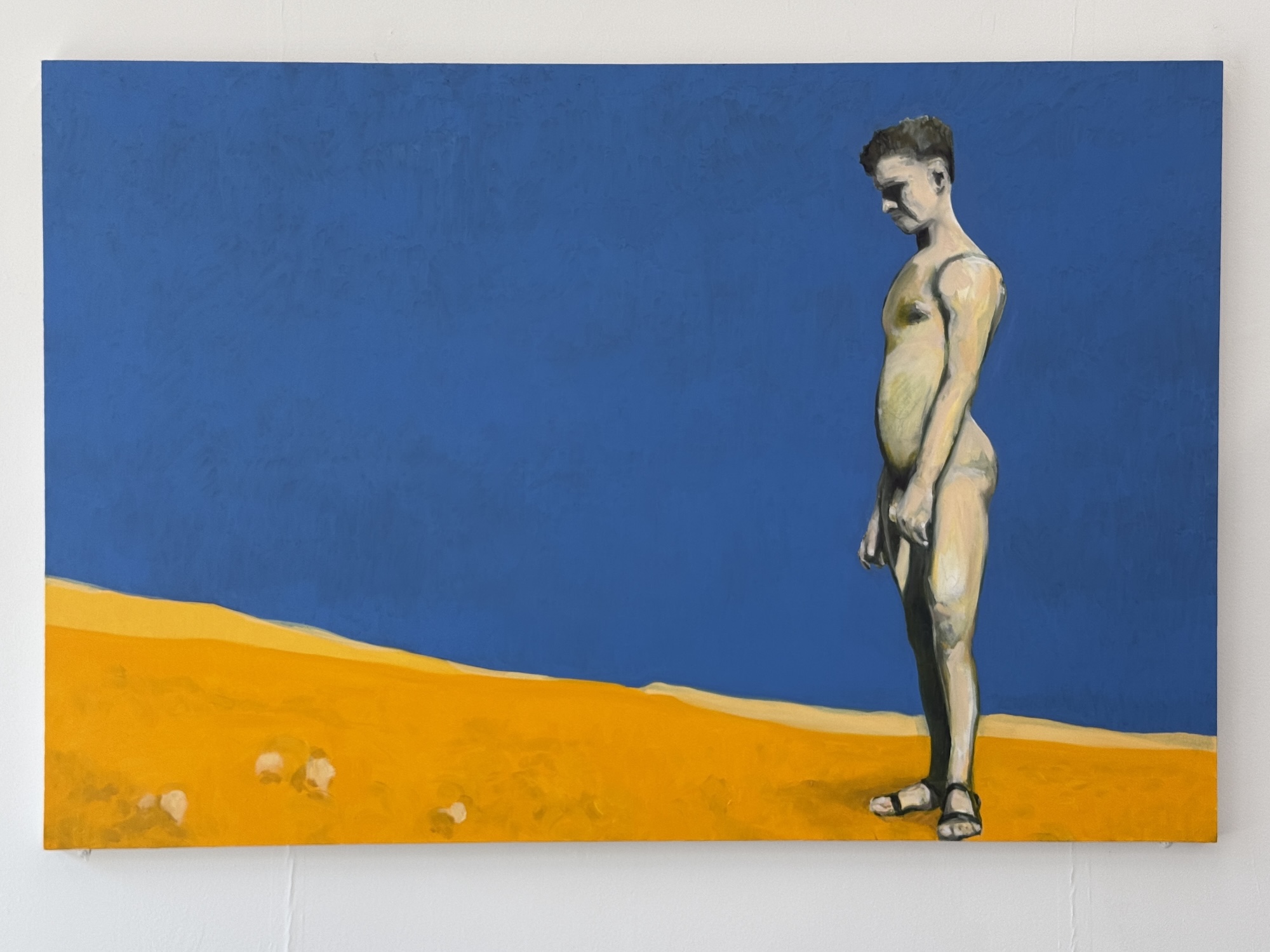
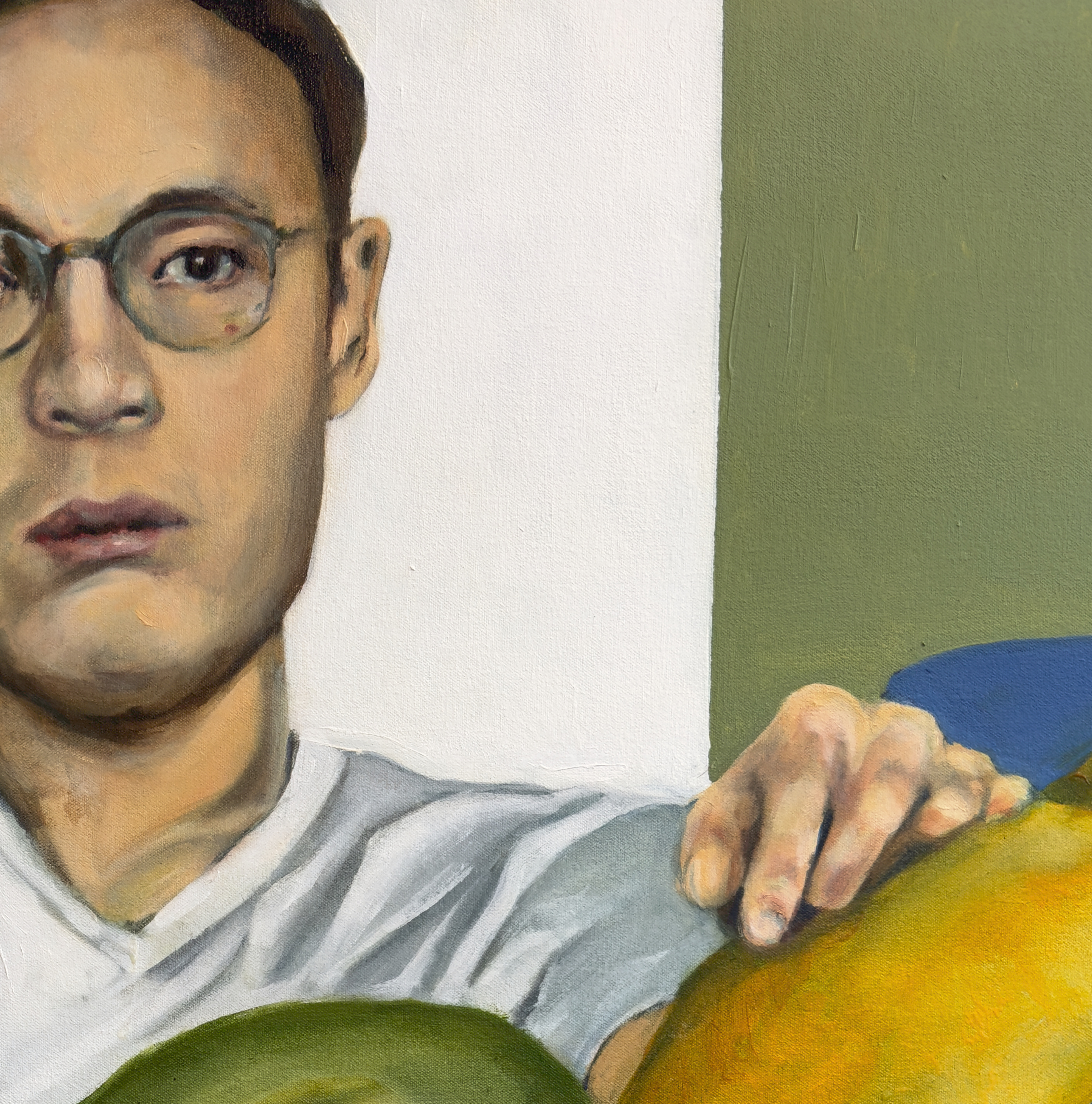
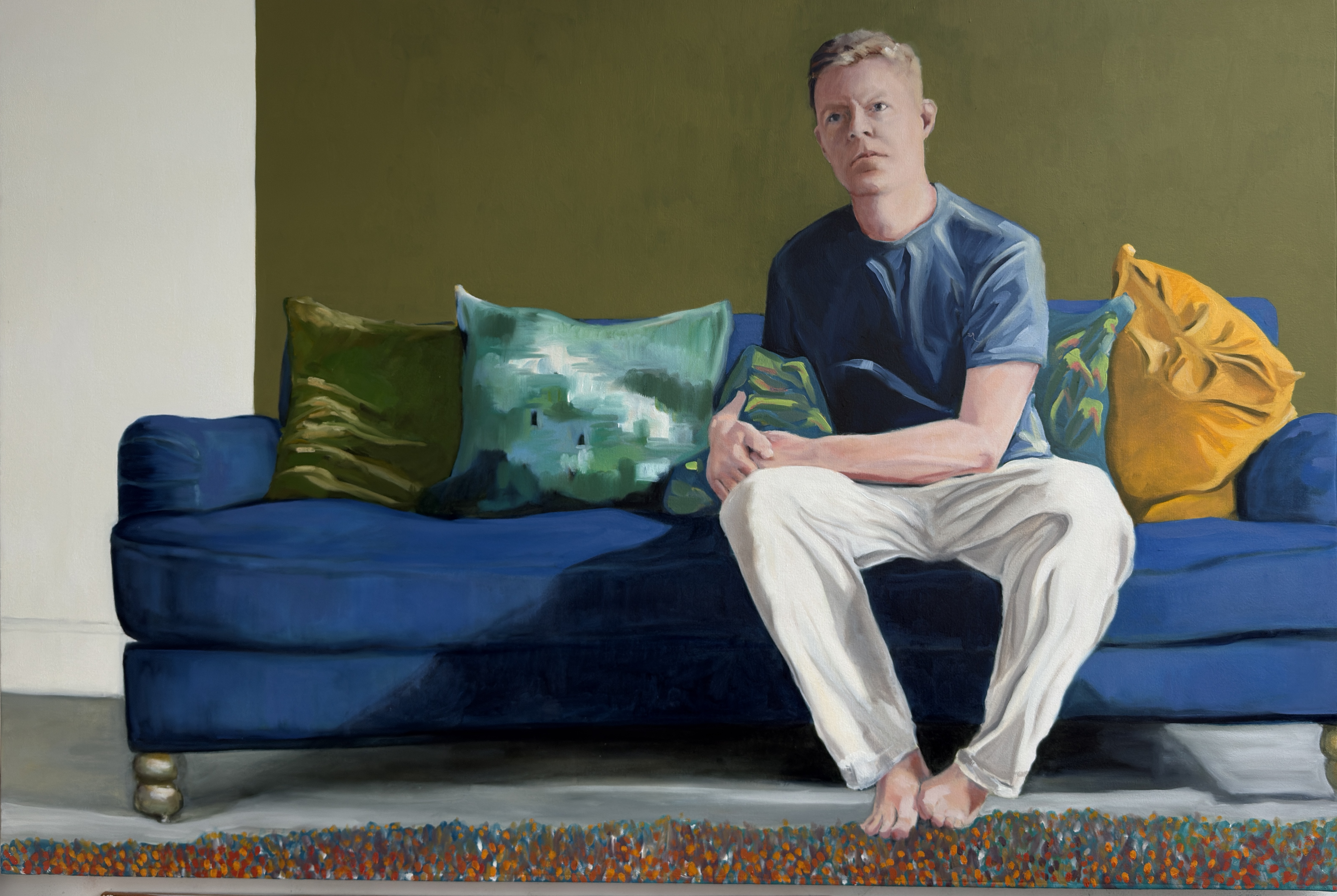
Symbolic Objects — Colour in my work is symbolic as well as visual. Blue signals conscious reasoning; yellow, optimism and open-mindedness; green, comfort and assurance; white, submission. These choices are not decorative — they are a reading system, inviting the viewer to move beyond the surface of the image and into the psychological state of the figure. Objects carry meaning in the same way. The recurring floral cushion that appears in both Don't Dream It, Be It... and Unforeseen Consequences represents a tropical homeland, the paradise of possibility, and the breadth of the world available to us — memory, aspiration and place held within a single painted object. I also use exaggerated space within the composition, allowing the figure to breathe and pause for introspection. In Resilience, the figure stands isolated in the vastness of the landscape, and that space does as much work as the paint.
Why do you create art?
I create art because I need to. Growing up as a gay man during the late 1970s and 1980s in the UK meant navigating a double life — shaped by societal and political forces that actively sought to suppress queer lives through shame and rigid ideals of masculinity and family. In the UK, the 1980s saw legislation (Section 28, 1988, repealed in Scotland on 21 June 2000) that explicitly prohibited the discussion of gay relationships in schools and public life — a deliberate act of state-sponsored erasure. For decades I carried the internalised shame that produced. Now, later in life, painting has become the means by which I examine it, process it, and let it go. It is an act of reclamation — of self, of story, and of space. The studio is genuinely my happy place: a place where I can be honest — with the work and with myself.
What messages or meaning are you hoping to convey?
At the core of my work is the question of what it means to simply exist as who you are — but my most recent paintings push that further, into the territory of how identity is negotiated even within love. Don't Dream It, Be It... shows my partner on our sofa, his body folding inward while the cushions flare outward — aspirations held in check, desire perhaps quietly eclipsed by devotion to another. In Unforeseen Consequences, I painted myself on the same sofa, unconsciously gripping and distorting that same floral cushion — a gesture I didn't plan, but which asked a difficult question: is this a metaphor for the damaging compromise that can exist even inside a loving relationship? These two paintings together suggest that knowing who you are isn't something you settle once. Even inside love, that question keeps coming back.
What is unique about you as an artist?
Several things distinguish my practice. First, my work is deeply autobiographical — not as confession, but as a structured, considered body of work tracing the arc of a queer life: from private self-awareness through compromise and resilience, and into a hard won domestic ease. Second, I came to formal postgraduate study at the Glasgow School of Art later in life, which means my paintings carry the weight of lived experience rather than purely academic exploration. That shift in timing changes everything about what ends up on the canvas. Third, my figures are either anonymised or self-portraits — a deliberate strategy that shifts between emotional distance and direct self-examination, giving the viewer a way in while I stay close to the personal truth of it. ArtMag UK observed that my figures are “frequently caught in moments of stillness — nude or semi-dressed, alone or in intimate domestic settings — evoking both presence and absence”.
With thanks to Steven J. Alles. Art & Ideas is a promotional newsletter featuring the art and process of a creative community in Philadelphia, USA.